Overview
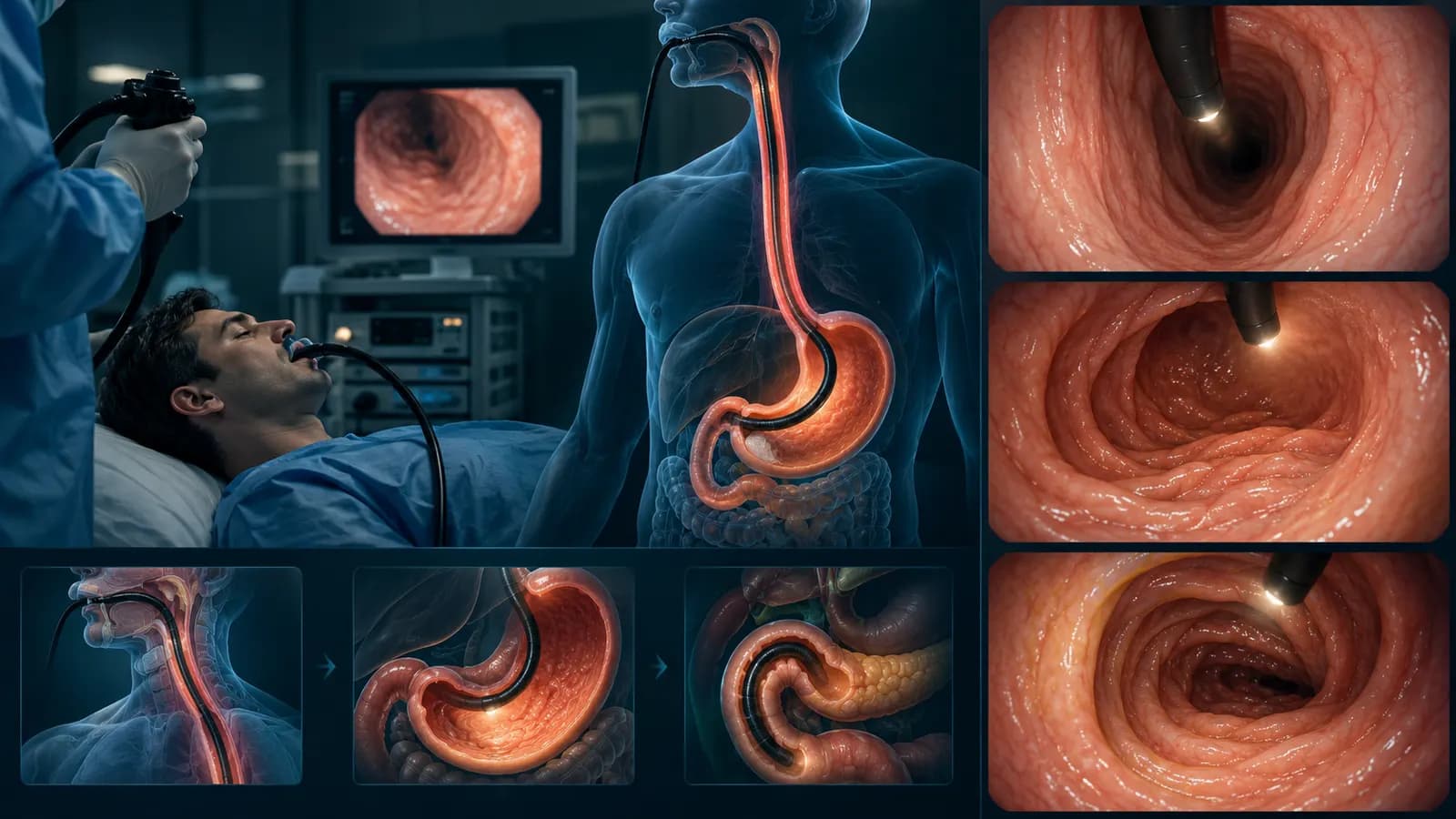
Endoscopy lets the doctor look directly at the lining of the digestive tract and take small tissue samples (biopsy) when needed. It helps find the cause of problems such as long-standing acidity, difficulty swallowing, bleeding or unexplained weight loss.
Before the test
Before an upper endoscopy you are usually asked not to eat for six to eight hours. A colonoscopy needs bowel preparation with a prescribed laxative. The chamber will explain the preparation when you book.
Training
Dr. Sohel-Uzzaman completed a Fellowship in GI Endoscopy under Prof. Dr. Bhavneet Singh Bhalla.
Common symptoms
- Long-standing acidity, heartburn or upper abdominal pain
- Difficulty or pain when swallowing
- Vomiting blood or passing black stools
- Blood in the stool or a change in bowel habit
- Unexplained weight loss or anaemia
When to see a doctor
- Black, tarry stools or vomiting blood (seek emergency care)
- Symptoms that continue despite medicine
If you have severe pain, vomiting, fever or heavy bleeding, go to the nearest emergency department.
This page is for general information and does not replace a consultation.